Hi!
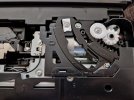
So I have a Canon Pixma TS 8350, I have had it for about five years. It was making some annoying noise. Nothing new really, but I finally decided to try and quite it down. I opened the right side panel and sprayed the sucker with a synthetic lubricant a few times. But instead of stopping the noise, it started making new kind of noises and it sounded louder and faster. Actually I think it did help dampen the original noise to some degree. Soon after this, as I was using the roller cleaning function to trigger the noise, it started to complain about a paper jam and gave me support code 1300 (I think it was). Even without any paper in the cassettte. The cassette was taken out, and there was nothing in the rear paper feeder. How is this possible? How does it determine it's a paper jam without any actual paper in the printer?
I turned it off, unplugged it, turned it back on and I tried to print something from Word but Word said I have a paper jam, and the same code came up on the printer again. After a few rounds of this error and power cycling, it now gives me code 6A80 every time it powers on and prints out a blank. This latest code just tells me to cancel the print job and turn it off and on again, and if the issue remains to contact a service center.
So basically, I broke it by lubricating it. How do you repair something that's technically not broken? If I try to disassemble it, what would I do in there? Clean up the lubricant and put it back together? I don't know much about printers, and I have never taken one apart. But I can probably do this. Any tips on what to think about when doing this? Like, how do I avoid gettting ink stains? How do I remember what goes where so I can put it back together again?
Thannks for any advice.
So I have a Canon Pixma TS 8350, I have had it for about five years. It was making some annoying noise. Nothing new really, but I finally decided to try and quite it down. I opened the right side panel and sprayed the sucker with a synthetic lubricant a few times. But instead of stopping the noise, it started making new kind of noises and it sounded louder and faster. Actually I think it did help dampen the original noise to some degree. Soon after this, as I was using the roller cleaning function to trigger the noise, it started to complain about a paper jam and gave me support code 1300 (I think it was). Even without any paper in the cassettte. The cassette was taken out, and there was nothing in the rear paper feeder. How is this possible? How does it determine it's a paper jam without any actual paper in the printer?
I turned it off, unplugged it, turned it back on and I tried to print something from Word but Word said I have a paper jam, and the same code came up on the printer again. After a few rounds of this error and power cycling, it now gives me code 6A80 every time it powers on and prints out a blank. This latest code just tells me to cancel the print job and turn it off and on again, and if the issue remains to contact a service center.
So basically, I broke it by lubricating it. How do you repair something that's technically not broken? If I try to disassemble it, what would I do in there? Clean up the lubricant and put it back together? I don't know much about printers, and I have never taken one apart. But I can probably do this. Any tips on what to think about when doing this? Like, how do I avoid gettting ink stains? How do I remember what goes where so I can put it back together again?
Thannks for any advice.